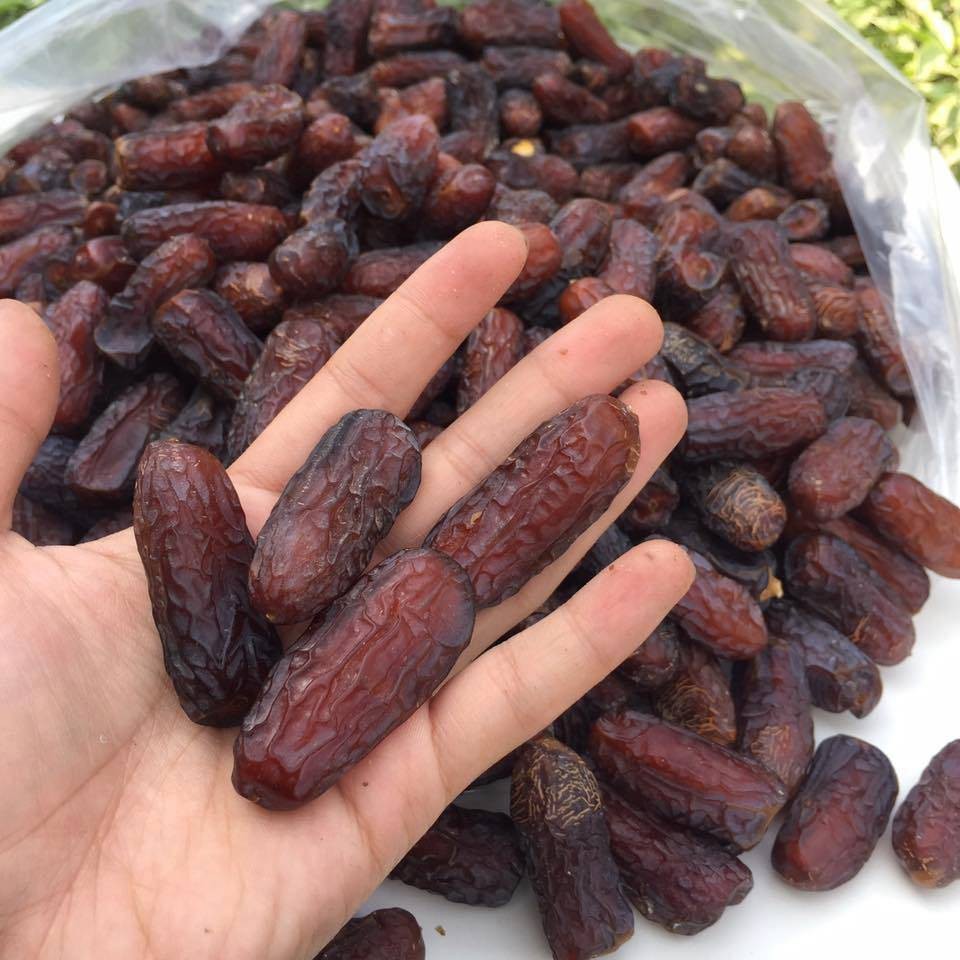
Dates have long held a place in traditional diets, cherished for their natural sweetness and high energy content. For centuries, buah kurma (date fruit) has been consumed as a quick source of nourishment during fasting periods, athletic performance, or physically demanding work.
Their energy value is well known. Many other health claims about dates go further than the research does. Below are ten common ones, each checked against published studies, with what those studies actually found.
This article is general information, not medical advice. If you have a health condition, talk to your doctor before changing your diet.
Nutrient figures are from USDA FoodData Central for Medjool dates (one date weighs about 24 g) and Deglet Noor dates, per 100 g.
1. Gut health and fiber
Dates are high in fiber: 6.7 g per 100 g for Medjool and 8 g for Deglet Noor. The NHS advises adults to aim for 30 g of fiber a day and links eating plenty of fiber with a lower risk of heart disease, stroke, type 2 diabetes and bowel cancer.
The idea that dates feed Bifidobacteria and Lactobacilli was tested in a 2015 crossover trial at the University of Reading. Twenty-two healthy adults ate seven dates (about 50 g) a day for 21 days. Bowel movements and stool frequency went up. The dates did not significantly change the growth of the bacterial groups that were measured. Mood was not studied.
Takeaway: a good fiber source that helped regularity in one small trial. The prebiotic claim was not confirmed.
2. Potassium and blood pressure
Dates are low in sodium and high in potassium: 1 mg sodium and 696 mg potassium per 100 g of Medjool. Potassium helps control the balance of fluids in the body and helps the heart muscle work properly, and adults need 3,500 mg a day (NHS).
A 2013 BMJ review of 22 randomized trials found that more potassium lowered systolic blood pressure by 3.49 mmHg and diastolic by 1.96 mmHg. The effect showed up in people with high blood pressure, not in people whose blood pressure was normal. Those trials were about potassium in general, not dates. The one date trial we found that measured blood pressure, a 12-week RCT in 79 people with type 2 diabetes eating 60 g of dates a day, found no change.
Three Medjool dates (about 72 g) carry roughly 500 mg of potassium, about a seventh of the daily need. If you have kidney disease, ask your doctor first. The NHS notes that people with chronic kidney disease can develop high blood potassium.
Takeaway: a potassium-rich snack. The one trial that tested dates on blood pressure found no effect.
3. Brain function
The brain claims come from animal work. Two studies used a mouse model of Alzheimer’s disease fed a diet with 2% or 4% Omani dates. One reported less oxidative damage in the brain after 15 months, the other better memory and learning and less beta amyloid. These were mice.
In people, a 2026 randomized crossover trial gave 35 healthy young adults the flesh of two Saudi date varieties. No cognitive score changed significantly, and the authors said the effects did not represent general enhancement or deterioration of cognitive performance. We found no study showing that dates delay Alzheimer’s disease in people.
Takeaway: promising in mice, not shown in people.
4. Inflammation
Dates do contain phenolic compounds. A 2009 pilot study found mainly ferulic and coumaric acid derivatives, plus a quercetin derivative, in Medjool and Hallawi dates. Ten healthy adults ate 100 g a day for four weeks. Their triglycerides fell by 8 to 15%, and serum oxidative stress fell by 33% after Hallawi dates but not Medjool.
The claim that regular date eaters show lower C-reactive protein (CRP) does not match the trial data. In the 12-week RCT above, CRP did not change. We found no trial on dates and joint pain.
Takeaway: the antioxidant compounds are there. Lower inflammation in people has not been shown.
5. Bones
Dates contain some bone-related minerals, in small amounts. Per 100 g of Medjool there is 64 mg calcium, 54 mg magnesium, 62 mg phosphorus and 2.7 µg vitamin K. Adults need 700 mg of calcium a day (NHS), so three dates give less than 7% of it.
Calcium helps build bones, and magnesium helps the parathyroid glands, which make hormones important for bone health, work normally (NHS). We found no study testing dates on bone density or osteoporosis.
Takeaway: a little calcium and magnesium. No evidence that dates protect bones.
6. Blood sugar
Dates are mostly sugar, yet tests put their glycemic index (GI) in the low range. A 2011 study of five varieties measured GIs of 46 to 55 in healthy adults, with similar values in 10 people with type 2 diabetes, and the dates did not cause significant blood sugar spikes in that group.
Low GI does not mean dates leave blood sugar flat. That study gave each person dates holding 50 g of carbohydrate and compared the rise in blood sugar with the rise from 50 g of glucose. Dates still raised it, only less than glucose did. A bigger portion means a bigger rise.
In a 16-week trial, 100 adults with type 2 diabetes ate three dates a day and their HbA1c did not change; total cholesterol fell slightly. The 60 g a day trial above also found no change in HbA1c. Neither showed dates improving blood sugar control.
Takeaway: low GI and no harm to blood sugar control at a few dates a day in trials. If you have diabetes, count them as carbohydrate.
7. Skin
The vitamin C claim is wrong. USDA lists 0 mg vitamin C per 100 g of Medjool dates and 0.4 mg for Deglet Noor. Vitamin C does help keep skin healthy (NHS), but you get it from other fruit and vegetables, not dates.
We found no human study showing that eating dates improves skin hydration or elasticity.
Takeaway: dates have almost no vitamin C and no proven skin effect.
8. Iron
Iron is essential for the production of hemoglobin, which helps transport oxygen through the blood. Dates contain some iron, copper and folate.
Dates do not carry much iron, though: 0.9 mg per 100 g for Medjool and 1.02 mg for Deglet Noor. Women aged 19 to 49 need 14.8 mg a day and men 8.7 mg (NHS), so three Medjool dates give about 0.65 mg. Copper and folate both help the body make red blood cells (NHS; NHS).
A 2025 review of date fruit products in women reported improved hemoglobin in adolescent girls. Anemia is a different matter: the NHS says iron deficiency anemia is treated with iron tablets for about 6 months. Dates add a little iron to the diet. They will not fix anemia on their own.
Takeaway: a small iron source. See a doctor if you think you are anemic.
9. Fertility
Most male fertility research is not on the fruit you eat. A 2018 systematic review found that date palm pollen, pit powder and gemmule extract improved sperm quality and hormone levels, and said the studies were limited in number and more research is needed.
For women, a 2025 review of 21 studies on date fruit products reported links with fertility measures, sexual function and some menopause symptoms. None of this shows that eating dates treats infertility. If you are trying to conceive, see a doctor.
Takeaway: early research, much of it on pollen and pits rather than the fruit.
10. Liver
There is no evidence that dates flush out toxins. The liver research is in animals. In a 2022 study, rats given a methanol extract of date flesh (600 mg per kg of body weight) for 21 days had less liver injury from the cancer drug cisplatin. That is a concentrated extract at a high dose in rats, not a few dates a day in people.
Takeaway: rat studies only.
Conclusion
Buah kurma is a good source of fiber and potassium, with a low GI and some antioxidant compounds. The bigger claims about the brain, bones, skin, fertility and liver rest on animal studies, extracts, or nothing at all.
For suppliers, sell on what holds up: fiber, potassium, low GI, taste and origin. Claims such as “prevents Alzheimer’s” or “detoxes the liver” are not supported and can mislead buyers.
If you are buying for your own use, check the variety and the packing date first. Our guides to Medjool dates and to checking date freshness cover both.
References
- Eid N, et al. Impact of palm date consumption on microbiota growth and large intestinal health. Br J Nutr. 2015;114(8):1226-36. PubMed 26428278
- Aburto NJ, et al. Effect of increased potassium intake on cardiovascular risk factors and disease. BMJ. 2013;346:f1378. PubMed 23558164
- Butler AE, et al. Effect of date fruit consumption on the glycemic control of patients with type 2 diabetes. Nutrients. 2022;14(17):3491. PubMed 36079749
- Subash S, et al. Effect of dietary supplementation of dates in Alzheimer’s disease APPsw/2576 transgenic mice on oxidative stress and antioxidant status. Nutr Neurosci. 2015;18(6):281-8. PubMed 24954036
- Subash S, et al. Diet rich in date palm fruits improves memory, learning and reduces beta amyloid in transgenic mouse model of Alzheimer’s disease. J Ayurveda Integr Med. 2015;6(2):111-20. PubMed 26167001
- Altuwairki D, et al. Acute effects of fruit flesh of two Saudi date varieties on mood and cognition in healthy young volunteers. Front Nutr. 2026;13:1733218. PubMed 42559168
- Rock W, et al. Effects of date consumption by healthy subjects on serum glucose and lipid levels and on serum oxidative status: a pilot study. J Agric Food Chem. 2009;57(17):8010-7. PubMed 19681613
- Alkaabi JM, et al. Glycemic indices of five varieties of dates in healthy and diabetic subjects. Nutr J. 2011;10:59. PubMed 21619670
- Alalwan TA, et al. Effects of daily low-dose date consumption on glycemic control, lipid profile, and quality of life in adults with pre- and type 2 diabetes. Nutrients. 2020;12(1):217. PubMed 31952131
- Tatar T, Akdevelioğlu Y. Effect of pollen, pit powder, and gemmule extract of date palm on male infertility: a systematic review. J Am Coll Nutr. 2018;37(2):154-160. PubMed 29087245
- Shirdel E, et al. Improving female health at various life stages: a systematic review of the impact of date fruit products. Sultan Qaboos Univ Med J. 2025;25(1):38-49. PubMed 40641695
- Gad El-Hak HN, et al. Methanolic Phoenix dactylifera L. extract ameliorates cisplatin-induced hepatic injury in male rats. Nutrients. 2022;14(5):1025. PubMed 35268000
- USDA FoodData Central: Dates, medjool (168191); Dates, deglet noor (171726).
- NHS: How to get more fibre into your diet; Vitamins and minerals: others; Calcium; Iron; Vitamin B; Vitamin C; Iron deficiency anaemia; Chronic kidney disease: treatment.